
Introduction
With cerebral palsy, many parents are faced with the question of when and how support should begin. Today it is certain: Early, targeted support can positively support development.
It's not about pressure or quick results, but about the right impetus at the right time.
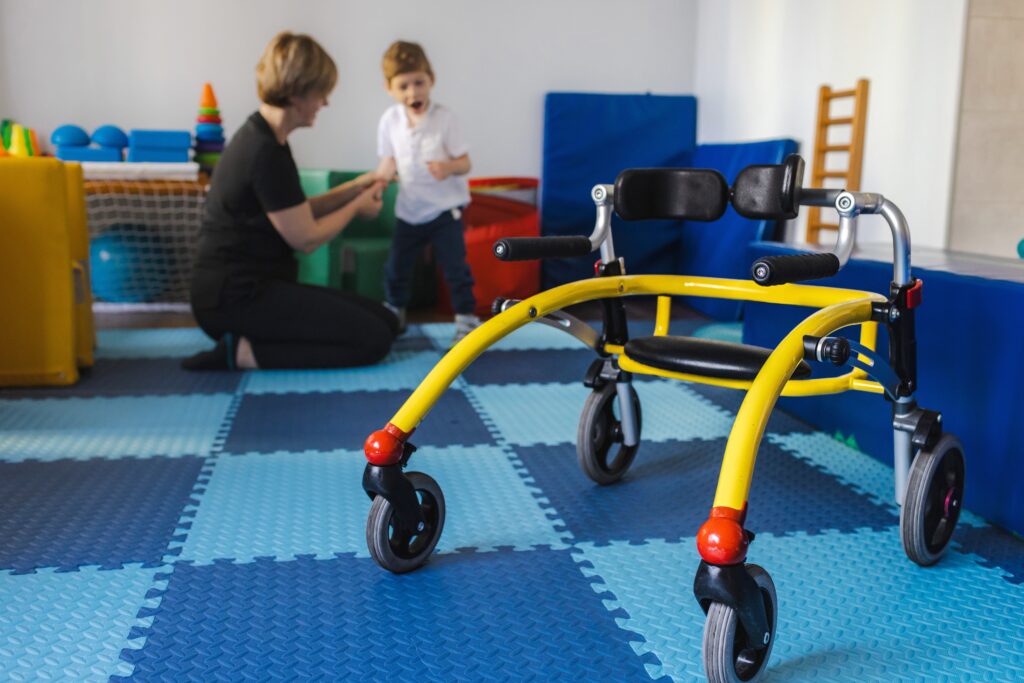
Why early support is so important
The child's brain is particularly adaptable in the first few years of life. This phase offers favorable conditions for:
The earlier targeted stimuli are set, the better existing potential can be utilized.
Neuroplasticity as a basis
The high adaptability of the child's brain is known as neuroplasticity.It also enables cerebral palsy:
Early support makes targeted use of this adaptability.
Importance of exercise and therapy
Early intervention does not mean „more therapy“, but appropriate, child-oriented movement.
Effective are:
Therapy approaches such as GIGER® MD® therapy rely on coordinative and rhythmic movement stimuli to support motor learning at an early stage.
Set realistic goals
Early support has clear limits.The aim is not to force certain skills, but rather
Good support is always based on the child - not on expectations.
Conclusion
Early support plays a central role in cerebral palsy.Targeted, individually adapted movement and therapy can make better use of development opportunities and support functional skills.
Structured forms of therapy such as GIGER® MD® therapy can be a useful complementary measure.
Author: Combo AG, manufacturer and distributor of the GIGER® MD® Therapy
Medical note: This article is for information purposes only and does not replace medical advice or treatment.
Last update: 2026