
Introduction
Movement plays a central role for children with cerebral palsy. It is not only part of the therapy, but a fundamental prerequisite for development, learning and participation in everyday life.
It's not about as much movement as possible, but about targeted and sensibly applied movement stimuli.
Movement as the basis for development
Children with cerebral palsy gain important experience through movement:
These experiences are crucial for stabilizing and further developing existing skills.
Why not every movement is equally effective
Everyday exercise alone is often not enough. The decisive factor is how exercise is organized.
The following are particularly effective:
Pure repetition without a learning stimulus usually leads to little progress.
Targeted training and motor learning
Targeted training starts where motor learning is possible. It demands:
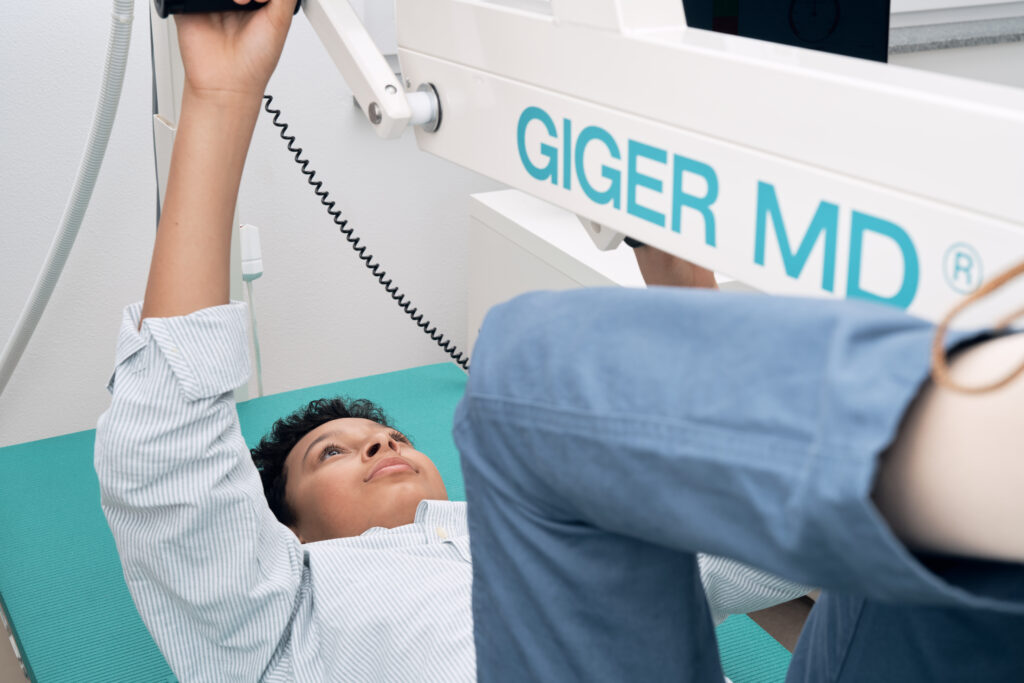
Therapy forms such as GIGER® MD® therapy use rhythmic and coordinative movement stimuli to specifically support motor learning processes.
Neuroplasticity as a basis
The child's brain is adaptable. This ability - neuroplasticity - makes it possible to improve movement sequences and develop new strategies.
Targeted movement utilizes this adaptability and supports functional development.
Conclusion
Movement and training are not an add-on for cerebral palsy, but a central component of support.Used correctly, they can help to support development and facilitate participation in everyday life.
Structured therapy approaches such as GIGER® MD® therapy can be a useful addition.
Author: Combo AG, manufacturer and distributor of GIGER® MD® Therapy
Medical note: This article is for information purposes only and does not replace medical advice.
Last update: 2026